Allez Fencing Club

Programs

Classes, individual lessons, and open fencing for beginners through competitive épée fencers.

01 / First steps

New to fencing?

Your first class introduces the equipment, safety rules, and basic movements. A coach helps you get fitted for gear and try fencing with a partner. If you enjoy it, continue in the regular class for your age group and build on the same movements each week.
Beginner details
02 / Youth

Ages 5–8

A one-hour class built around movement, games, target practice, and supervised fencing. Young fencers learn to follow instructions, move with control, and get comfortable using the equipment.

At this age, a useful lesson might be stopping when asked, finding a target, or moving without losing balance. Short activities give children repeated chances to succeed and try something a little harder. Coaches help them learn the rules of practice as well as the movements of fencing.

Explore ages 5–8
03 / Youth

Ages 9–10

A 90-minute class with footwork, blade work, games, and fencing. Students start connecting movement to what an opponent is doing: finding the right distance, recognizing an opening, and choosing when to act.

Students learn to keep score, follow a referee’s commands, and finish a bout even when it is going badly. A coach helps them choose one thing to change rather than trying to fix everything at once. That makes practice easier to understand and gives them a way to recognize progress.

Days, times & fees
04 / Development

Ages 11–14

Training becomes more focused as fencers build technical skills and tactical understanding. Drills work on distance, timing, preparation, and responding to an opponent. Bouts give them a place to test those ideas.

A drill might ask a fencer to draw a reaction, change distance, or wait for a better moment to attack. In bouts, they find out whether that choice works against someone trying to stop them. Fitness sessions support the physical demands, while open fencing gives them more opportunities to test and adjust the work.

Days, times & fees
05 / Competitive

Ages 15+

For fencers working toward competitive goals, training brings technical, tactical, physical, and mental preparation together. A coached hour follows weekday fitness, with open fencing afterward. Saturday provides a longer training block.

Training connects the work in practice with the problems a fencer meets in competition. Group drills develop repeatable actions and decisions; private lessons address individual needs; bouts test both against different opponents. Coaches help fencers review what happened, choose priorities, and return to practice with a clearer plan.

Days, times & fees
06 / Adults

Adult beginner & intermediate

You can start as an adult or return after time away. Our separate adult group gives you time to learn the movements, ask questions, and get comfortable fencing with other adults.

You learn how to move, score a touch, and keep the right distance from another fencer. Short drills lead into supervised bouts, with time to ask questions and try again. Returning fencers can rebuild their timing and explore new ideas. Competition is an option, and regular practice with other adults is a worthwhile goal in its own right.

Adult Learn to Fence
07 / Individual work

Private lessons

A 20-minute lesson gives you a coach’s full attention. It might focus on an action that keeps failing, a change in preparation, or a response you need against a particular opponent.

Working one to one lets the coach adjust the action, explanation, and pace to the person in front of them. A beginner may need help coordinating the hand and feet; a competitor may be refining how they prepare an attack or respond to a particular reaction. Bring that work into class and open fencing so it becomes something you can use against an opponent.

Lesson prices
08 / Practice

Open fencing

Fence different opponents and put your training into practice. Choose something from class or a private lesson to test against different opponents.

Come with a small objective: hold a different distance, try a preparation, or use an action from your lesson. Fence several opponents and notice what changes. Open fencing gives you the repetitions that turn a coached idea into a choice you can make for yourself.

Open fencing options
09 / Events & Competitions

Competitions, clinics & camps

In-house competitions, focused clinics, camps, and private group events offer more ways to learn and fence. For someone starting competition, the first step is a conversation with their coach.

Explore more
Your next steps

How fencers progress

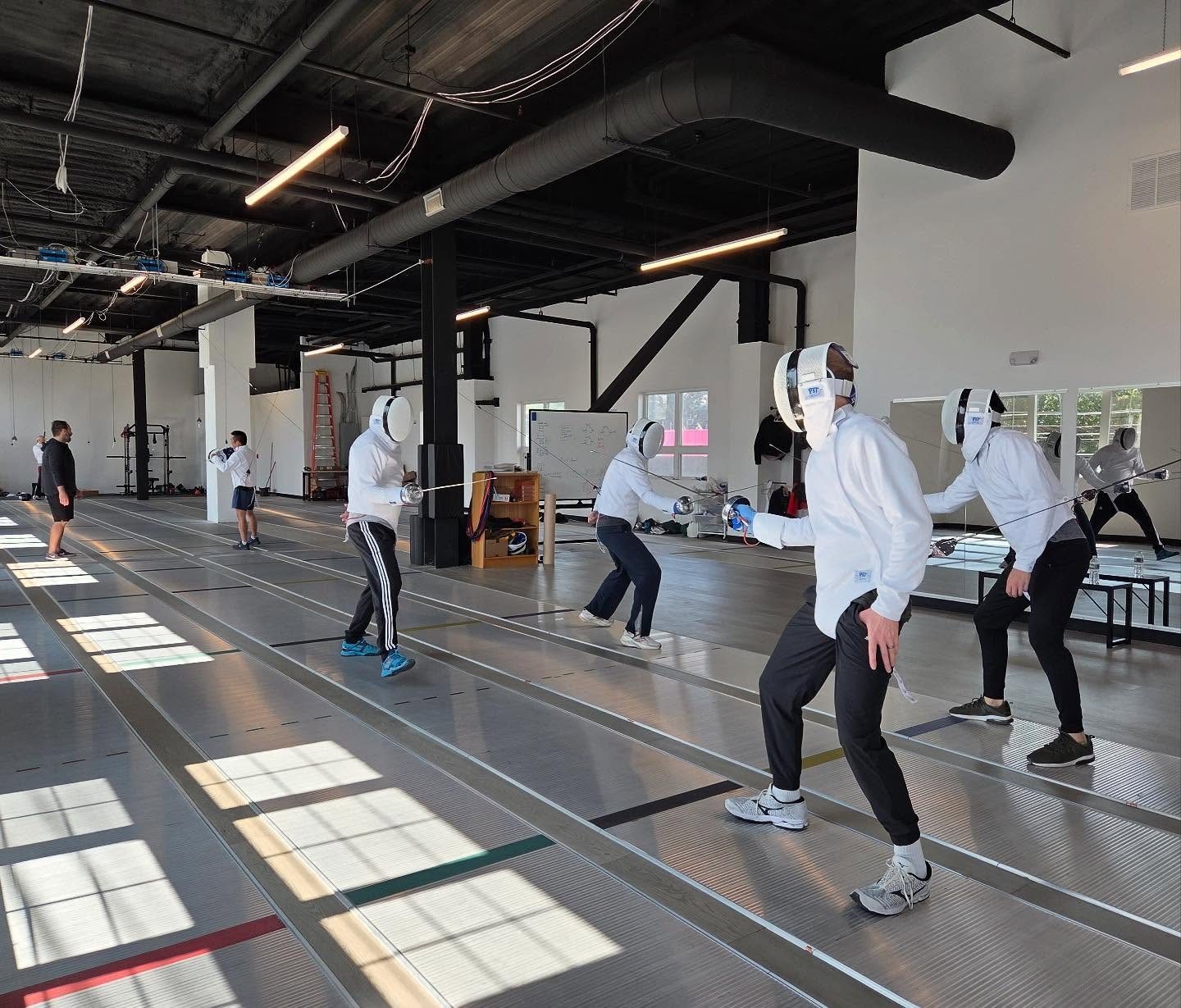
Fencers practicing blade work together at Allez

Build the basics

First, learn to wear the equipment correctly, move with control, and follow the safety rules. Then practice simple actions with a partner and begin short bouts. Feeling comfortable with that sequence matters more than knowing lots of actions.

Find your group

Stay with a class routine long enough to build on it. A coach looks at how you move, follow the rules, and use an action in a bout when discussing your next steps. Moving forward is about what you can do and understand, as well as your age.

Choose your direction

Some fencers enjoy regular practice; others want to compete. Talk with your coach about your goals, how often to train, and whether private lessons would help. Competition becomes a next step when you are ready for it.

After initial beginner training, fencers continuing in regular classes need their own equipment. See the equipment policy.

Beginner equipment

Rent your fencing gear

Assigned take-home protective gear and a carry bag are available for $15/month, with a $100 refundable deposit. Bring your kit to every class. Club épées and body cords remain at the club for class use.

View rental details and return policy